
Organizing classes to teach and guide the practice of traditional folk songs, dances, and music contributes to arousing pride, raising awareness, and enhancing residents’ capacity in preserving and handing down ethnic cultural heritage.
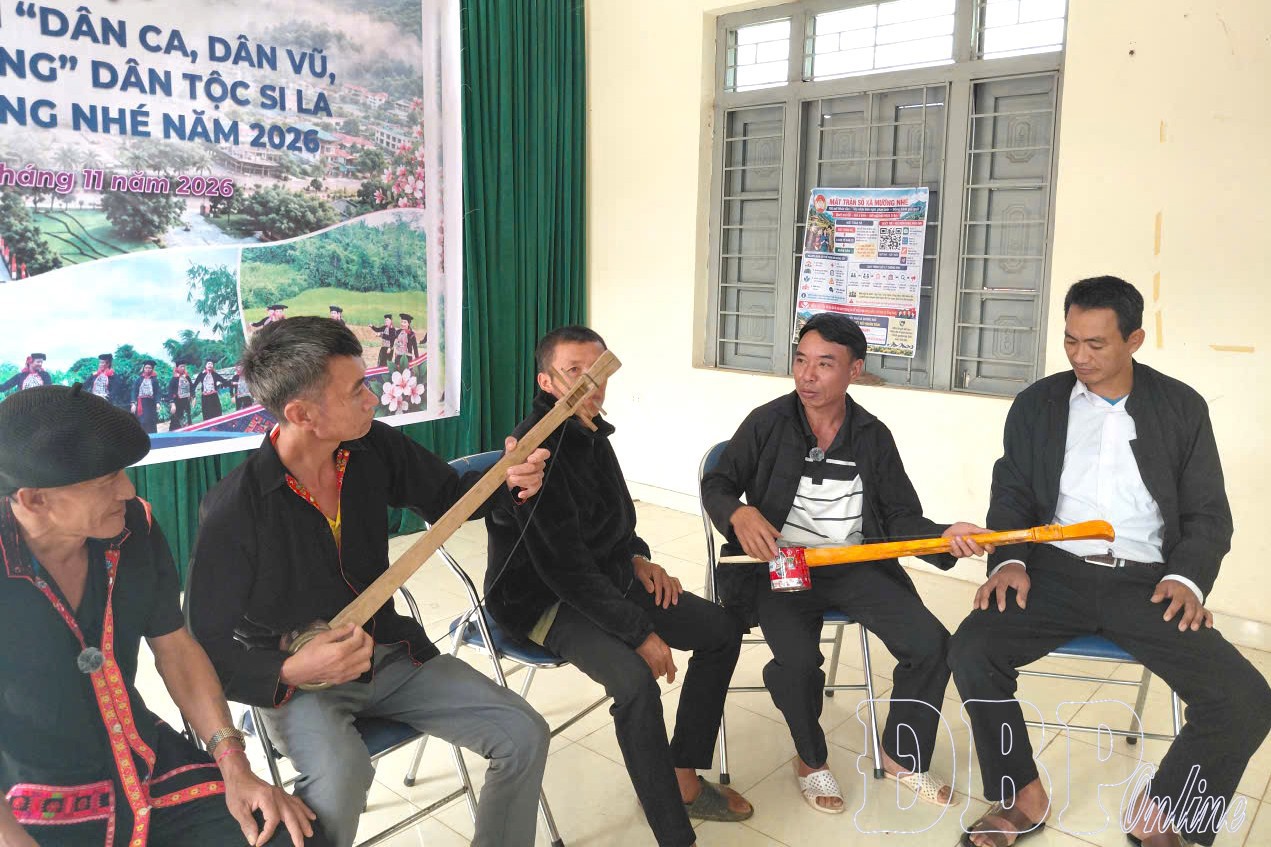
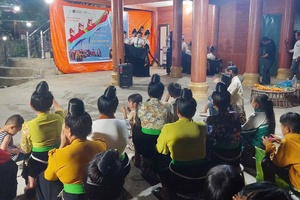
In Nậm Sin village, traditional folk tunes and dance rhythms of the Si La ethnic people are revived through the guidance of those knowledgeable in ethnic culture. Movements may still appear hesitant and not yet fully practiced, and verses are repeated time and again, yet each practice session offers an opportunity for learners to access and understand more about their ethnic culture. In 2026, Mường Nhé commune organized 4 classes teaching and guiding the practice of traditional folk songs, dances, and music of the Hà Nhì, Si La, Hmông, and Thái ethnic groups, with a total of 89 participants. In particular, the class for the Si La ethnic group had 18 participants, focusing on introducing folk songs, dances, musical instruments, and folk cultural activities associated with community life. The activity aims to enhance community capacity in preserving, restoring, and promoting intangible cultural heritage values in connection with local tangible cultural heritage.
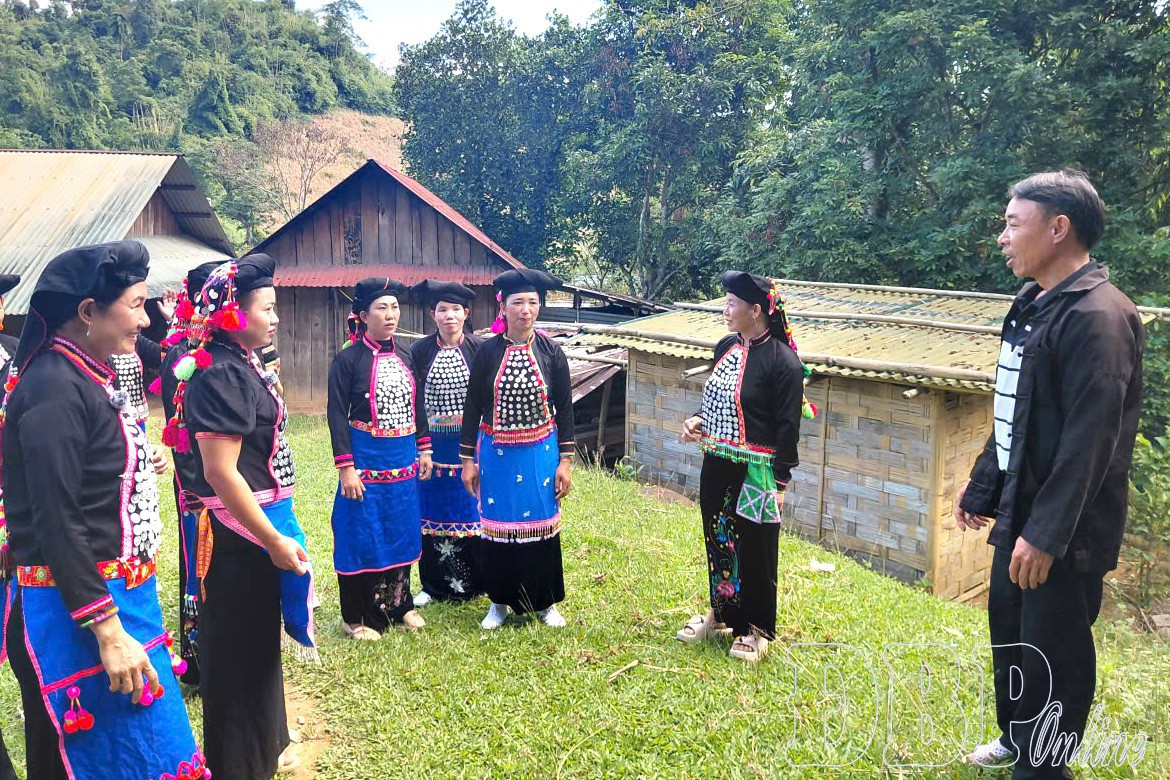
In class, each song and dance tune is introduced in terms of both expression and cultural significance. For folk songs, participants are guided in traditional songs, performance melodies, lyrics, and contents preserved within the community. A prominent example is the song “Brothers and Sisters Sing Under the Moonlight” (Mỳ nhú, mỳ tu), carrying the content of courtship singing under the bright moon: “My love, let us go enjoy the moonlight together / the night of the 16th, the full moon has risen / … Brothers and sisters, let us hold hands / … Sing together and smile brightly.” Through the lyrics, emotions and sentiments in the spiritual life of the Si La people are conveyed in a rustic and intimate manner.
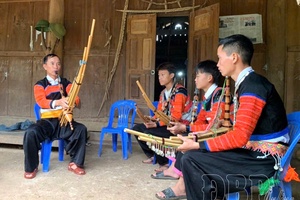
Hù Chà Khớ shared: “Folk songs and folk music of the Si La people were handed down by our ancestors through many generations. I want to pass on to my children and grandchildren traditional songs and how to play our ethnic group’s hand lute and flute. Only when the younger generation knows how to sing and play instruments will traditional cultural values continue to be preserved and not lost.”
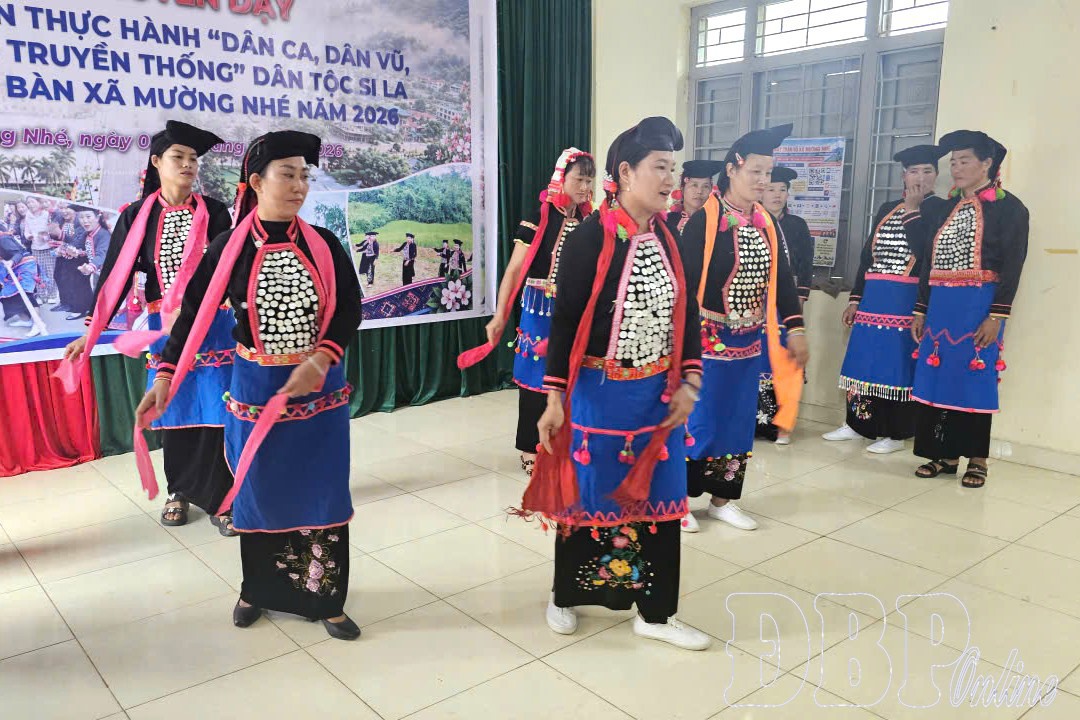
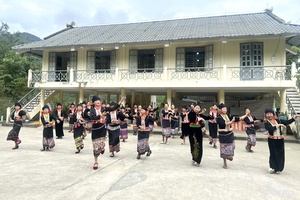
The classroom space is arranged flexibly, sometimes indoors, sometimes in the yard or on the porch. The learning atmosphere is lively with folk dances. Each dance introduced has its own content and performance style, reflecting distinctive features in the cultural life of the Si La people. A prime example is the dance “Praising Costumes” (Bì khứ chọ chừ), in which performers sing while dancing and use scarves as props. The dance content aims to praise the beauty of traditional costumes, detailing patterns and embellishments. Through each movement, aesthetic values associated with ethnic costumes are vividly portrayed, helping the younger generation understand the cultural beauty of their community.
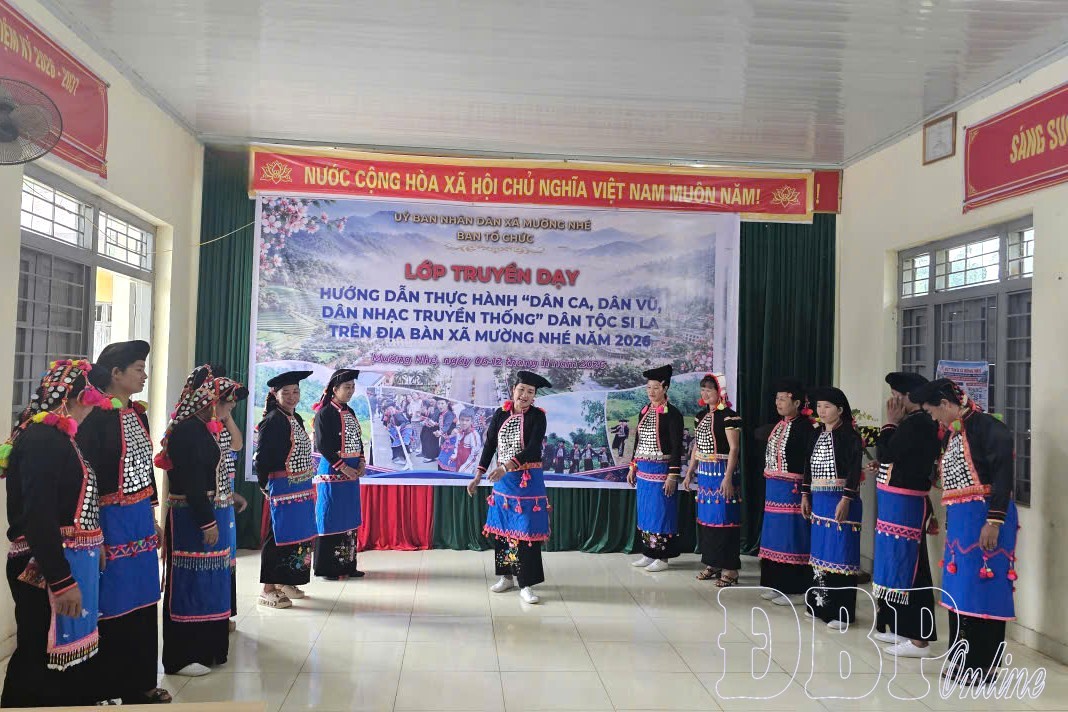
The dance “Quick Hands” (Nhăm nhăm bơ) carries a tone close to productive labor. The movements simulate labor processes, expressing an encouraging spirit that urges everyone to work swiftly and enthusiastically. Body movements and rhythmic coordination among members create the distinctive character of the dance, while reflecting community solidarity and mutual assistance.
Pờ Cố Trái, an instructor of Si La ethnic dances, shared: “Dances of the Si La ethnic group all carry specific meanings, tied to daily life and labor. The costume praise dance depicts the beauty of traditional costumes, while the Quick Hands dance simulates productive labor. I guide the younger generation from basic movements to coordination so they understand and dance in accordance with our ethnic culture.”
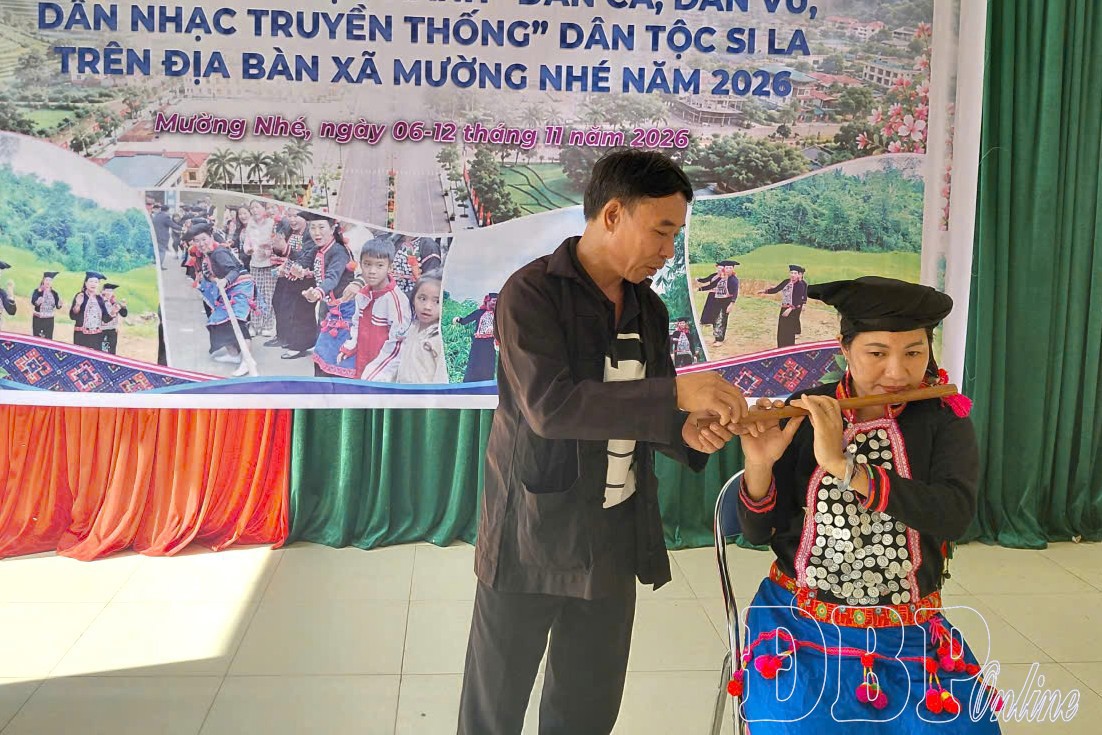
Beside folk songs and folk dances, traditional music is also integrated into the program. Learners are introduced to the hand lute (Tứ phè là thu) and the flute (Lạ pí), learning performance forms and how to use traditional instruments according to practical class conditions. Behind each instrument, melody, or dance lies cultural knowledge accumulated and preserved in community life. However, amid socio-economic changes, maintaining practice and transmission of traditional values faces the risk of fading away.
Hù Cố Oanh, born in 1993, from Nậm Sin village, said: “I attended the class wishing to learn more traditional folk songs and dances of my ethnic group to join in preserving them. Nowadays, fewer young people know how to sing and dance traditional Si La pieces. If the younger generation does not learn and practice, these cultural features risk fading and may even cease to be handed down. After the course, I will guide my children and other young villagers so that together we understand and preserve our ethnic culture.”
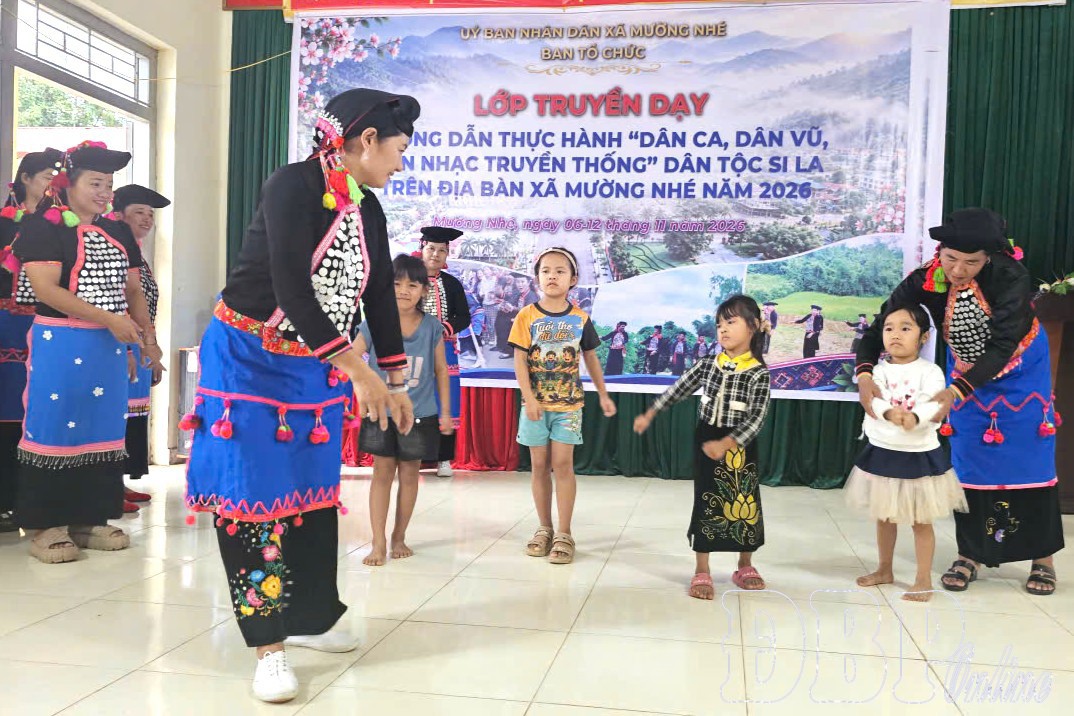
Through teaching classes, cultural practitioners have the opportunity to directly transmit knowledge and skills; learners gain understanding of the origins, meanings, and performance spaces of heritage genres. Thanks to this, a core force capable of participating in organizing cultural and artistic activities in the village is gradually formed, helping maintain a heritage practice environment right within the community.
Values of folk songs, folk dances, and folk music are sustained sustainably when people understand, cherish, regularly practice, and proactively transmit them to subsequent generations. When courtship songs, costume-praising dances, labor-simulating rhythms, and the sounds of the hand lute and flute continue resounding in community life, Si La cultural identity will be preserved and promoted.
Anh Nguyễn

You have 500/500 characters left
Please enter 5 or more characters!!!